Antique Cuts
Are Old Mine Cut Diamonds More Expensive? The Honest Answer
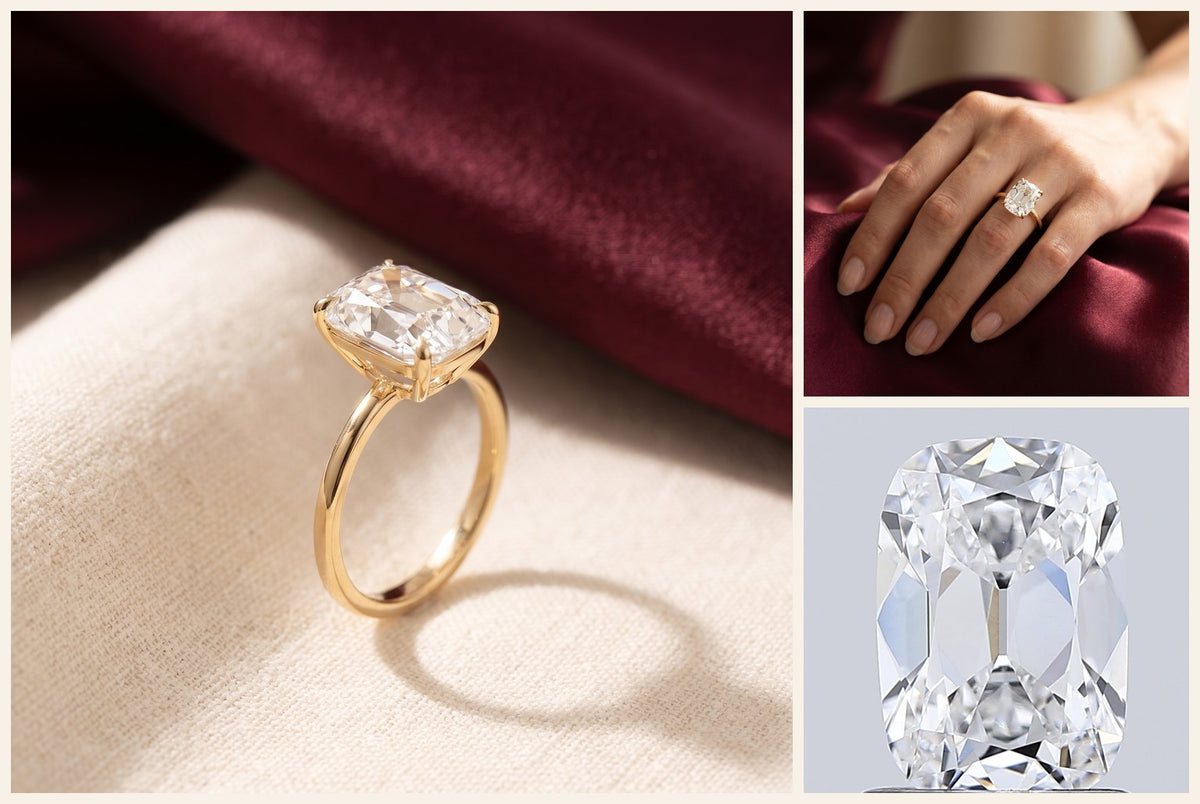
Are old mine cut diamonds more expensive? Yes, when they are mined antiques. Genuine old mine cuts are scarce, many have been hand-recut, and dealers add a vintage premium on top. A lab-grown old mine cut gives you the same antique look, graded by IGI, at a fraction of what a mined antique costs.
It is the question most people ask last, right before they decide. Here is the full answer.
Why Old Mine Cut Diamonds Cost More
Four things push up the price of a mined old mine cut.
Scarcity. Nobody is cutting new antique diamonds. Every genuine old mine cut was cut more than a century ago, and the supply only shrinks as stones are lost, damaged or recut into modern shapes. Fewer stones and steady demand mean higher prices.
Recutting and repair. Antique stones have lived a life. Many arrive with chipped girdles, worn facets or lopsided proportions, and restoring one takes skilled hand work and costs weight. That labor and that loss are built into the price.
The vintage premium. An antique stone carries romance, and the market charges for it. Dealers who specialize in period diamonds price in the hunt, the history and the rarity of a well-preserved example.
Specialty markups. Antique and specialty shapes are stocked by relatively few sellers, and when a shape is hard to find it is often marked up heavily.
What You Are Really Paying For
It helps to separate two things that usually get bundled together: the look and the age.
The look is the cutting style: the cushion outline, the tall crown, the small table, the open culet and the broad, blocky flashes. The age is the stone's history, the fact that someone cut it by hand generations ago.
If the age itself matters to you, a mined antique is the only way to have it, and paying for that history is a perfectly fair choice. If what you love is the look, you do not need to pay for the age. That is where lab-grown changes the picture.
Old Mine Cut Diamond Cost: Mined vs Lab-Grown
A lab-grown old mine cut is a real diamond, cut today in the antique style. It is the same carbon crystal as a mined diamond with the same optical behavior, and it is graded by IGI, with color, clarity and measurements recorded on the report.
What it does not carry is the scarcity premium, the restoration cost or the antique markup. You get the look you fell for, in a newly cut stone with crisp facets and no wear. That is exceptional value: an antique cut without the antique premium.
- Mined antique old mine cut: cushion outline with hand-cut irregularity and a real history. Broad, warm flashes, sometimes softened by wear. Priced with a scarcity and vintage premium, plus any restoration. Best in a period or vintage-style setting, for buyers who want the age as much as the look.
- Lab-grown old mine cut: the same cushion outline and antique faceting on a newly grown, IGI-graded diamond. Broad, warm flashes from crisp, unworn facets. Priced without the antique premium. Best in claw prongs or an engraved, milgrain setting, in the size and proportion you choose.
- Modern cushion cut: cushion outline with brilliant faceting. Brighter, busier sparkle without the antique character. Best in four or double prongs, or a halo.
- Modern round brilliant: round outline engineered for maximum light return. Crisp, intense sparkle. Best in almost any setting, for a classic modern look.
How We Price Old Mine Cut Diamonds
We believe in fair, honest pricing. Every stone carries one clear price.Look for a seller who prices the stone itself plainly, not as a markdown from an invented starting figure.

That matters most with antique cuts, where buyers have so few reference points. Our loose stones are listed individually with their grading details, so you can judge each one on its own terms. Our 1.50 carat Old Miner Lab-Grown Diamond, for example, is D color and VVS1 clarity, graded by IGI, with Excellent cut, polish and symmetry and no fluorescence, and it measures 8.60 × 5.89 × 3.73 mm. Browse the full old mine cut diamond collection to compare shapes and sizes side by side.
How to Judge Value in an Old Mine Cut
Read the measurements, not just the carat weight. Old mine cuts are deep, so two stones of the same weight can face up very differently. The ratio of length to width tells you whether a stone is square or elongated.
Confirm what the report says. For a lab-grown stone, the report should state the origin plainly. For a mined antique, ask whether the stone has been recut and how much weight it lost.
Look at the crown and the culet. A tall crown and a small open culet are part of the antique character, and a stone sold as an old mine cut should have them. If you want the background on the cut itself, our guide to old mine vs old European cuts covers it.
Questions People Ask
Why are old mine cut diamonds so expensive?
Mined old mine cuts are expensive because genuine antiques are scarce and getting scarcer, many need skilled recutting or repair, and dealers add a premium for vintage character. Specialty shapes are also stocked by few sellers and often marked up heavily. A lab-grown old mine cut carries none of those costs.
Is a lab-grown old mine cut a real old mine cut?
Yes, in cut style. Old mine describes how a diamond is faceted: a cushion outline, high crown, small table and often an open culet. A lab-grown old mine cut has that faceting on a real, newly grown diamond. What it does not have is antique age.
How do I know if an old mine cut is fairly priced?
Compare like with like. Check the grading report for color, clarity and exact measurements, confirm whether the stone is mined or lab-grown, and ask whether an antique has been recut. A single clear price is far easier to judge than one shown against an inflated former price.
Should I choose a mined or lab-grown old mine cut?
Choose mined if the stone's age and history matter to you as much as its look. Choose lab-grown if you love the antique faceting and want it in a chosen size and proportion, newly cut and graded, without the antique premium. Both are real diamonds with the same old mine character.
The look you fell for, at a price you can understand.
Questions? Write to us at info@thejewelrystudio.us.