Diamond Cuts
Emerald Cut vs Asscher: How Step Cut Diamonds Handle Light
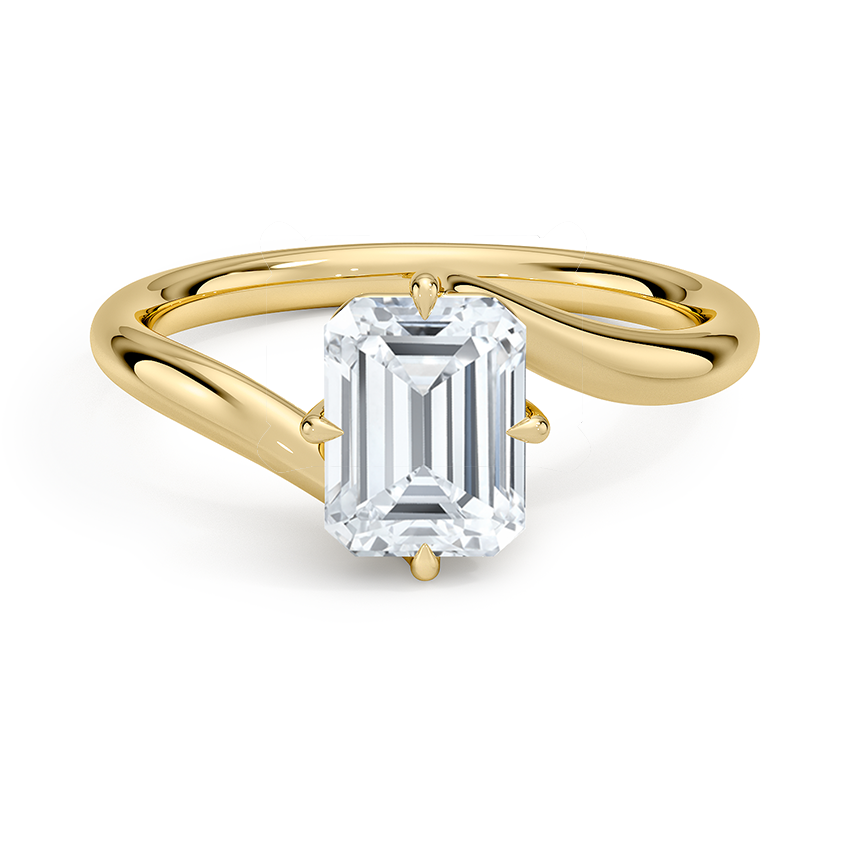
There are two great families of diamond cutting. Brilliant cuts, like the round, oval and pear, are faceted with triangles and kites that break light into many small points. Step cuts are faceted with long, flat, parallel planes that descend toward the bottom of the stone like the steps of a staircase. The emerald cut vs Asscher question sits entirely inside that second family: the same faceting idea, two very different shapes.
If brilliants sparkle, step cuts flash. Here is what that means, and how to choose.
How a Step Cut Handles Light
Look into a good emerald cut and you will see a series of nested rectangles, bright and dark, sliding over each other as the stone moves. It is often called a hall of mirrors. Instead of hundreds of small sparks, you get fewer, broader flashes of light and clear planes of contrast.
The appeal is clarity of form. A step cut looks architectural and calm. It suits people who like clean lines in everything else they own.
Why Clarity and Color Matter More in Step Cuts
A brilliant's busy facet pattern does a good job of hiding small inclusions. A step cut does not. Its broad, open table works like a window into the stone, so whatever is inside is easier to see. The same goes for color: a step cut shows the body color of a diamond more plainly than a brilliant does. If you love step cuts, spend your attention on clarity and color before you spend it on size.
Watch, too, for a window of a different kind. If a step cut is too shallow, part of the center can look glassy and see-through rather than full of reflections. Look for a center that stays lively as the stone tilts.
The Emerald Cut
The emerald cut is a rectangle with cut corners. The corners are not decoration. They remove the most fragile points of a sharp rectangle. It is the classic step cut, and its long lines make a finger look longer.
Ratio matters a great deal. A nearly square emerald cut reads almost like an Asscher. A long one reads like a bar of light. There is no correct ratio, only the one that looks right to you.

Because an emerald cut shows everything, the setting should hide nothing. The Meridian Solitaire Ring is built around the shape: a sculptural bypass band wraps around the center stone, and minimal compass-style claw prongs let in more light, so the stone's mirror-like flash shows from every angle. It takes center stones from 1 to 5 carats, on a 2 mm high-polish band.
The Asscher Cut
The Asscher is a square step cut with cut corners. It is usually cut with a high crown and a deep pavilion, which gives it its signature look from above: concentric squares that seem to fold inward toward the center, sometimes described as a windmill.
Because it is square, an Asscher sits compactly and reads as more vintage than an emerald cut. Because it is deep, it can look smaller face up than its carat weight suggests. Judge it by eye, not by number. If vintage character is what draws you, our piece on Old Mine vs. Old European cuts follows the same thread through the brilliant family.
Emerald Cut vs Asscher Cut, Side by Side
- Outline: the emerald cut is a rectangle, the Asscher a square. Both have clipped corners.
- On the hand: the emerald cut lengthens the finger. The Asscher sits compact and centered.
- Character: the emerald cut reads modern and lean. The Asscher reads vintage and deep.
- Face-up size: at the same weight, the shallower emerald cut usually shows more surface.
Step-Cut Side Stones and Baguettes
A baguette is a small, narrow rectangular step cut with far fewer facets than an emerald cut. It is rarely the center of anything. Its job is support: lines of light beside a center stone. A tapered baguette narrows at one end, which leads the eye inward.


The Cadence three stone ring shows how well the family works together: an emerald-cut center between two tapered baguette side stones, every one of them step cut, so all the facets speak the same language. The center is held by claw prongs and the side stones are bar set for a smooth finish. The Grand Seraphine takes the idea further, with two emerald-cut side stones whose step-cut faceting echoes the center.
Living With a Step Cut
Step cuts show fingerprints and dust on the table more readily than brilliants, because there is less faceting to scatter the eye. A soft brush, warm water and a little mild soap bring the mirrors back.
Questions People Ask
What is the difference between an emerald cut and an Asscher cut?
Both are step cuts with cut corners. The emerald cut is a rectangle, so it reads long and lean and makes a finger look longer. The Asscher is a square, usually cut deeper with a higher crown, which gives it concentric squares that seem to fold toward the center and a more vintage look.
Does an Asscher cut look smaller than an emerald cut?
Often, yes, at the same carat weight. An Asscher is usually cut deep, so more of its weight sits below the girdle where you cannot see it face up. An emerald cut spreads its weight along its length. Judge both by eye on the hand rather than by the number on paper.
Do emerald cut diamonds show inclusions more?
Yes, more than brilliants do. A step cut's broad, open table works like a window into the stone, and its long facets do little to scatter the eye, so inclusions and body color are easier to see. If you love step cuts, give clarity and color your attention before size.
Is a step cut less sparkly than a brilliant?
It sparkles differently. A brilliant breaks light into many small points. A step cut returns fewer, broader flashes and clear planes of contrast, often described as a hall of mirrors. Neither is better. Put one of each side by side and notice which you keep watching: the sparks or the planes.
Look at both families, then look again. Your eye will choose before you do.
Questions? Write to us at info@thejewelrystudio.us.