Diamond Alternatives
Lab-Grown Diamond vs Moissanite: How to Tell Them Apart
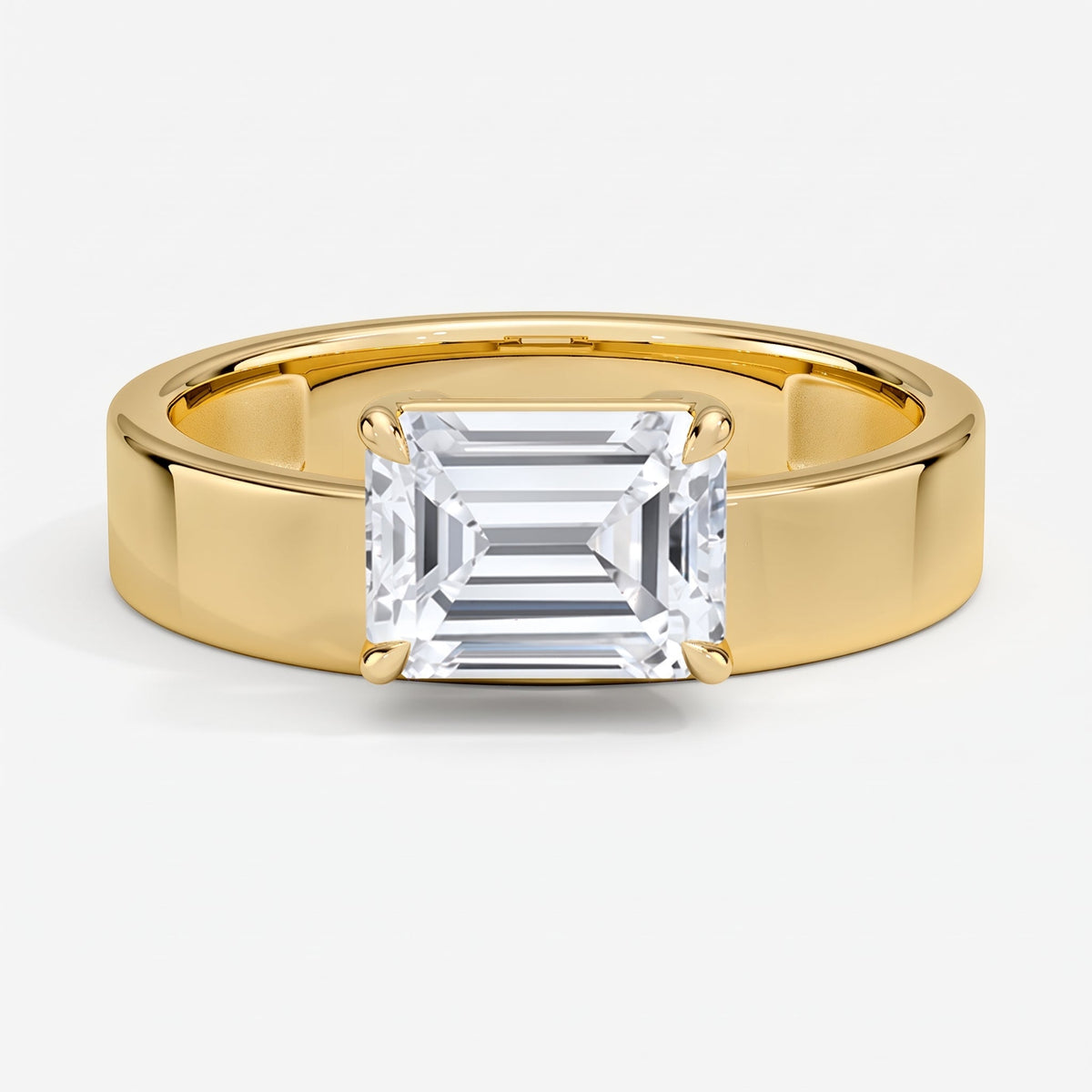
The difference in lab-grown diamond vs moissanite is simple: a lab-grown diamond is real diamond, pure carbon with the same crystal structure as a mined diamond, while moissanite is silicon carbide, a different mineral. Diamond is harder and shows a balanced white sparkle; moissanite shows stronger rainbow fire and is doubly refractive.
Both are made in a laboratory today, which is where the confusion starts. But they are not two grades of the same thing. They are two different materials that happen to look alike across a room.
What Each Stone Is Made Of
A lab-grown diamond is carbon atoms arranged in diamond's cubic crystal lattice. Chemically, physically and optically it is diamond. The only difference from a mined stone is where it formed. Ours are grown by CVD, chemical vapor deposition, in which carbon from a gas builds up on a thin diamond seed, layer by layer. Our piece on whether lab-grown diamonds are real goes deeper into that.
Moissanite is silicon carbide. It does exist in nature, but so rarely that it was first identified in the late nineteenth century in material associated with a meteorite. Nearly all moissanite in jewelry is made in a lab. It is a handsome gem in its own right. It is simply not a diamond, and it should never be sold as one.
Hardness and Everyday Wear
Diamond sits at 10 on the Mohs scale, the top. Moissanite sits at about 9.25, harder than sapphire and well suited to daily wear. In practice both survive ordinary life well. The difference shows over decades: diamond holds sharp facet edges and a high polish a little longer, and only another diamond can scratch it.
Sparkle: The Biggest Visible Difference
Light behaves differently in each material, and that is what your eye notices first.
Moissanite bends light more strongly than diamond and splits it into colors more than twice as much. Its dispersion, the spread of white light into spectral colors, is roughly 0.104, against about 0.044 for diamond. The result is a vivid rainbow flash, especially in sunlight. Some people love it. Others find it busier than they expected.
Diamond's sparkle is more balanced. You see white brilliance, flashes of colored fire and contrast between light and dark facets, in proportions that feel calm rather than prismatic. Neither is wrong. It is a matter of taste, and it is worth seeing both in daylight before deciding.
Lab-Grown Diamond vs Moissanite at a Glance
- Lab-grown diamond: pure carbon, Mohs 10, single refraction. Balanced white brilliance with measured fire. Graded on the same color and clarity scales as a mined diamond. Suits any setting.
- Moissanite: silicon carbide, Mohs about 9.25, double refraction. Strong rainbow fire, most visible in sunlight. Not graded on the diamond color and clarity scales in the same way. Suits any setting.
- Mined diamond: pure carbon, Mohs 10, single refraction. Optically the same as lab-grown. Graded on the same scales. Suits any setting.
- White sapphire: corundum, Mohs 9. A softer, quieter sparkle with little fire. Best in protective settings such as a bezel.
Double Refraction and How Experts Tell Them Apart
Moissanite is doubly refractive: light entering it splits into two rays. Look through the side of a moissanite at an angle with a loupe and the back facet edges can appear doubled, a soft blur where a diamond would show one crisp line. Diamond is singly refractive, so its facet edges stay single.
Basic thermal testers, which measure how fast a stone carries heat, can misread moissanite as diamond because both conduct heat very well. That is why jewelers use testers that also check electrical conductivity, or send stones to a gemological laboratory. Telling a lab-grown diamond from a mined one is a different task altogether. Because they are the same material, it takes laboratory instruments.
Color and Grading
Diamonds, lab-grown or mined, are graded on the familiar scales: color from D downward, clarity from Flawless through the VVS and VS grades and beyond. The diamonds in our finished pieces are E/F color and VVS clarity, near the top of both scales.
Moissanite is not described on the diamond color scale in the same way. Modern moissanite can look colorless face up, though some stones show a faint gray or green tint in certain light. If you are comparing, look in daylight, under warm indoor light and from the side, where any tint tends to show first.
Which Should You Choose?
If you want the look and behavior of a diamond, including how it ages over a lifetime of wear and how it is described on paper, choose diamond. Growing it in a lab changes its origin, not its material. If you love intense rainbow fire and prefer a different gem, moissanite is a durable choice, and it is honest to call it exactly what it is.
What we would avoid is any listing that blurs the two. Ask what the stone is made of and how it was graded, and expect a plain answer.


To see how a diamond actually behaves, give it room. Our Sparrowe Floating Solitaire raises the center stone on an open gallery above a wide band, so light reaches it from every side. In a band, the Seabright Eternity sets round lab-grown diamonds in shared open prongs that let light through each stone.
Questions People Ask
Is moissanite a lab-grown diamond?
No. Moissanite is silicon carbide, a separate mineral, while a lab-grown diamond is pure carbon in diamond's crystal structure. Both are usually made in a laboratory, which causes the mix-up, but only the lab-grown diamond is diamond. A seller should always name moissanite plainly and never call it a diamond.
Can you tell moissanite from a diamond by eye?
Often, with some practice. Moissanite shows stronger rainbow fire, especially in sunlight, and under a loupe its back facet edges can look doubled because it is doubly refractive. A diamond's facet edges stay single and crisp. At a quick glance across a room, though, most people cannot tell, which is why testing and grading matter.
Is a lab-grown diamond harder than moissanite?
Yes. A lab-grown diamond is 10 on the Mohs scale, exactly like a mined diamond, while moissanite is about 9.25. Both are durable enough for an engagement ring worn every day. Over many years, diamond keeps sharp facet edges and a high polish slightly better, and only another diamond can scratch it.
Does moissanite pass a diamond tester?
It can pass a basic thermal tester, because moissanite conducts heat much like diamond does. Testers that also measure electrical conductivity, and laboratory instruments, separate the two. If a stone's identity matters to you, and in an engagement ring it should, rely on a gemological report or a jeweler with the right equipment, not a single quick test.
Both stones can be beautiful. The point is to know which one you are looking at, and to choose it on purpose.
Questions? Write to us at info@thejewelrystudio.us.