Antique Cuts
Old European Cut Diamond: The Round Antique, Explained
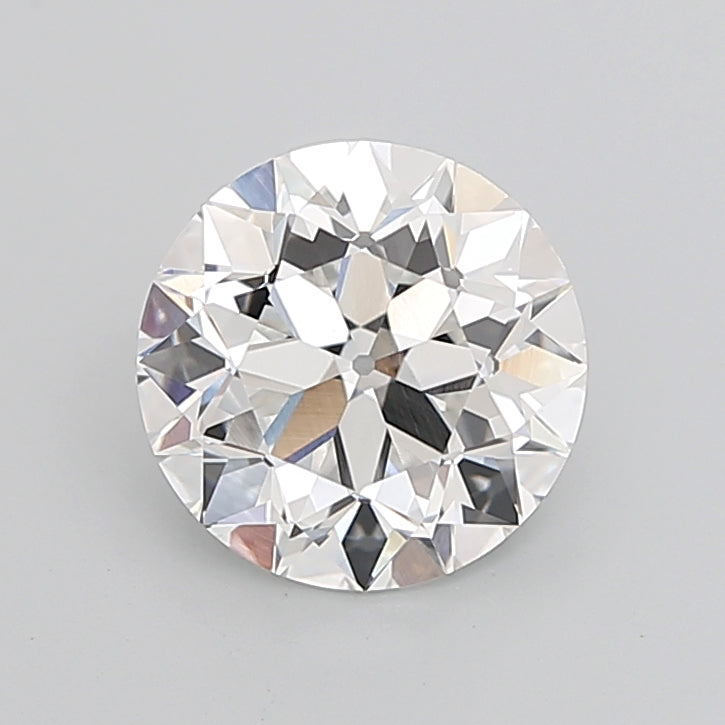
An old European cut diamond is a round antique diamond with a small table, a tall crown, a deep pavilion and usually an open culet, the small facet at the bottom that shows as a circle in the center. It was the leading round cut from the late 1800s into the early twentieth century.
If you have ever looked at a grandmother's ring and noticed a small dark dot at its heart, or a flower-like pattern of broad facets, you have likely met one. It glows rather than glitters, and it is the direct ancestor of the round brilliant sold everywhere today.
Where the Old European Cut Came From
For most of diamond history, stones were shaped largely by hand and by eye. Cutters worked to keep as much weight from the rough crystal as they could, and the shapes reflected it. The old mine cut, a softly squared cushion, was the dominant form for generations.
As cutting tools improved in the late nineteenth century, especially the ability to turn a stone and shape it round, cutters could produce a truly circular outline. The old European cut was the result. It kept the older proportions, tall and deep with a small table, and gave them a round shape. Over the early twentieth century, as cutters refined proportions for brightness, it gradually gave way to the modern round brilliant.
How to Recognize an Old European Cut Diamond
Five features give it away.
- A round outline.
- A small table, the flat top facet, noticeably smaller than on a modern round.
- A tall crown, which gives the stone a high, domed profile from the side.
- A deep pavilion, often finished with an open culet that shows as a small circle in the center face up.
- Broad facets that meet in a pattern often described as a flower or a pinwheel.
Most have 58 facets counting the culet, much like a modern round. The difference lies in their size and angles, not their number.
How It Handles Light
Facet size governs sparkle. The modern round brilliant uses relatively small facets and precise angles to return as much white light as possible, which produces a bright, busy glitter. The old European cut's broad facets break light into fewer, larger pieces. You get bold flashes of white and color, and in soft or candle-like light the stone seems to glow from within.
That is why antique lovers describe it in terms of warmth and character rather than brightness. Under strong store lighting a modern round wins on sheer sparkle. At dinner, in lamplight, the old European cut often looks more alive.
Old European Cut vs Its Closest Alternatives
- Old European cut: round, with a small table, tall crown and open culet. Broad, chunky flashes and a soft glow. Best in a slender solitaire or a collet that shows its profile.
- Modern round brilliant: round, with a larger table and flatter crown. Maximum white brightness and fine sparkle. Suits any setting.
- Old mine cut: a softly squared cushion with similar tall, deep proportions. Equally broad flashes in a squarer outline. Best in claw prongs.
- Rose cut: a flat base under a domed top of triangular facets. A gentle, mirror-like shimmer rather than sparkle. Best in a bezel.
- Portuguese cut: round, with many rows of facets. A dense, shimmering texture. Best in open settings that admit light.
We compared the two great antique cuts side by side in old mine vs. old European cuts, so we will not repeat that here.
An Old European Cut, Grown Today
Mined antique stones are scarce, and many were recut long ago into modern rounds, so finding a large, clean original takes patience. A lab-grown old European cut gives the same proportions and the same glow in a new stone, cut with modern symmetry. We list them under the trade name Euro Cut.


Take our 5.51 carat Euro Cut lab-grown diamond. Its listing gives F color, VVS2 clarity and measurements of 11.05 by 11.07 by 7.04 mm. A depth of 7.04 mm on a stone about 11 mm across is roughly 64 percent, deep in the way an antique round should be. For a smaller scale, the 1.50 carat Euro Cut is D color and VVS2 clarity and measures 7.25 by 7.24 by 4.50 mm. The full range is in our Euro Cut diamond collection.
Setting an Old European Cut Diamond
The tall crown is the best feature of this cut, so choose a setting that shows it. A slender solitaire with fine claws lets you see the profile from the side. A collet or bezel, a smooth rim of metal, suits the period look and protects the edge. Yellow and rose gold flatter the warm glow; platinum and white gold make it read cooler and crisper.
Be careful with a heavy halo. The small table and broad facets are meant to be seen, and too much surrounding sparkle competes with the gentle light the cut is known for.
Questions People Ask
What is the difference between an old European cut and a round brilliant?
Both are round, and both usually have 58 facets counting the culet. The old European cut has a smaller table, a taller crown, a deeper pavilion and often an open culet, so it shows broad, chunky flashes and a soft glow. The modern round brilliant has a larger table and flatter crown, tuned for bright, fine sparkle.
Are old European cut diamonds still made?
Yes. Cutters today produce new old European cuts, in both mined and lab-grown diamond, following the antique proportions of small table, tall crown and open culet. Modern equipment makes them more symmetrical than most originals, while keeping the broad facets and glowing look that people love in antique stones. They are often listed as Euro Cut.
Why does an old European cut have a hole in the middle?
It is not a hole. It is the culet, a small flat facet at the bottom of the pavilion that cutters added to protect the point from chipping. Seen through the table, it shows as a small circle at the center of the stone. It is a hallmark of the cut and part of its antique charm.
Do old European cut diamonds sparkle?
They do, differently. Instead of the fine, busy glitter of a modern round, an old European cut throws larger, slower flashes of white light and color. Under bright store lights it can look quieter than a modern round, but in warm, low light it often looks livelier, with a glow that seems to come from inside the stone.
The old European cut is a round diamond with a memory. If you love its glow, look at it from the side first, and let it sit high enough to be seen.
Questions? Write to us at info@thejewelrystudio.us.