East-West Settings
East West Engagement Ring: Inside the Sutton Bezel-Prong Solitaire
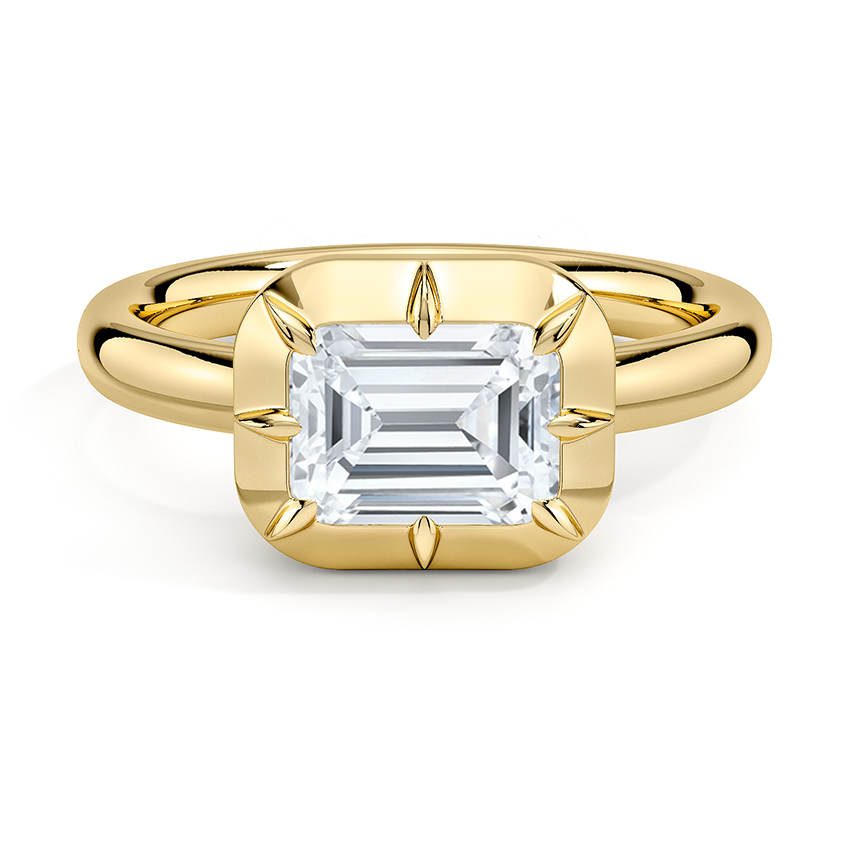
Most solitaires point the stone along the finger. The Sutton turns it ninety degrees. An east west engagement ring sets an elongated center stone across the finger instead of along it, and that one decision changes how the ring reads from across a room, how it sits next to a wedding band and how it feels to wear. Here is what the Sutton is, piece by piece, and why each part is there.
What East-West Means on a Ring
East-west describes orientation. Picture the finger as running north to south, from knuckle to nail. A conventional setting lays an elongated stone along that line. An east-west setting lays it across the finger instead, so the long axis runs side to side.

The effect is architectural. The stone reads as a horizontal bar of light rather than a vertical one, the ring looks lower and calmer, and the geometry becomes the point. On the Sutton East-West Bezel-Prong Solitaire, setting the stone this way gives the ring a secure feel and a sharp, deliberate geometric edge.
A Bezel and Prongs at Once
Settings usually choose a side. A bezel is a continuous rim of metal around the stone's edge: smooth, protective, quiet. Prongs are individual claws: open, light and more visibly made by hand. The Sutton uses both.
The bezel frames the stone. Then eight decorative prongs wrap around its edge, adding support and a texture you can see and feel. The rim gives the clean outline. The prongs break that outline into a rhythm, so the setting looks built rather than poured, and the frame never reads as a solid band of gold around the diamond.
The Band, and the Space Beside It
The band is a slim 2.5 mm with a low profile, so it sits close to the finger. That matters for everyday wear, because a ring that sits low catches less and is easier to forget you are wearing, in the good sense.
It matters even more for the second ring. The Sutton sits flush against wedding bands, so the pair lines up with no gap. Many engagement rings need a curved or notched band to sit beside them. A flush fit lets you choose a wedding band for itself, rather than for how it works around the setting.
One Finish, End to End
A high-polish finish carries from the bezel through the shank without a change in surface, which is why the ring looks like one piece of metal from any angle. Nothing decorative competes with the stone. The light that runs along the band leads straight to the center.
Choosing the Metal
The Sutton comes in yellow, rose and white gold, and each one changes the frame. If you are still weighing gold against other metals, our guide to 14K vs. 18K gold and platinum sets out how they differ.
- Yellow gold makes the bezel a visible line of warmth around the stone and leans into the ring's graphic quality.
- Rose gold softens the geometry slightly and sits gently against warmer skin tones.
- White gold lets the bezel and prongs recede, so the eye goes to the shape of the diamond first.
Choosing a Center Stone for an East West Engagement Ring
The Sutton is a mounting. The center diamond is selected separately and added to complete the ring, and the ring is sold only with a selected center diamond. That is the right way around. In an east-west setting the stone is the whole composition, so it should be chosen with the setting in mind.
Elongated shapes are the natural partners, because their length is exactly what the orientation shows off. Think about the outline first. The width of the stone across your finger is now what people see, so a stone that looks modest north to south can feel generous east to west.
An East-West Solitaire Without the Bezel

East-west is not tied to one setting. The Sparrowe floating solitaire takes the opposite approach: four claw prongs, a center raised above an open gallery and a bolder 4 mm band. Its main photographs show an emerald-cut center set east-west. Where the Sutton is enclosed and graphic, the Sparrowe is open and airy. Both sit flush against a wedding band.
Who the Sutton Is For
It suits someone who likes clean lines, who wants a ring that is unmistakably a solitaire but not the one everyone else wears, and who works with their hands. It is a quiet ring with a strong opinion.
Questions People Ask
What is an east west engagement ring?
It is a ring that sets an elongated center stone horizontally, so its long axis runs across the finger rather than from knuckle to nail. Ovals, emerald cuts, marquise and pear shapes are the usual choices. The result looks lower, calmer and more graphic than the same stone set in the conventional direction.
Does an east-west setting make a diamond look smaller?
Not smaller, but different. The stone's width across the finger becomes what people see first, so an elongated diamond can feel generous east to west even when it looked modest set the usual way. Carat weight stays the same. What changes is which dimension of the stone faces the room.
Can a wedding band sit flush with an east west engagement ring?
It depends on the setting. Some rings need a curved or notched band to fit beside them. The Sutton is built with a slim 2.5 mm low-profile band that sits flush against wedding bands, so the pair lines up with no gap and you can choose the second ring for itself.
Is a bezel or prong setting better for an east-west stone?
Each has a case. A bezel gives a clean, protective rim around the stone's edge. Prongs leave more of the outline open to light. The Sutton uses both: a bezel frames the stone while eight decorative prongs wrap its edge for added support and texture, so the metal never reads as one solid band.
Lay a pen across your finger and look at it for a moment. You will know quickly whether sideways suits you.
Questions? Write to us at info@thejewelrystudio.us.